
Buying an AI tool on a lifetime deal is a different bet from buying storage or a CRM on one. A storage vendor sells you disk space it already owns. A CRM vendor runs software on servers whose costs it sets and controls. An AI tool vendor sells you a friendly wrapper around a model it rents from OpenAI, Anthropic, or Google, and the rent on that model is decided in a room the vendor has never sat in. That gap is the whole story of this category, and it's why the same $59 code can be the best money you spend all year or a dead login by next spring.
So the question isn't "is this AI tool good." Plenty of them are good today. The question is whether the person who sold you the lifetime access can keep paying the model bill without either raising your prices, throttling your usage, or quietly shutting the thing down. Most buyers never ask it.
The sticker price is the cheap part
A lifetime deal has two prices. The one on the checkout page, and the one the vendor pays every time you press the button. For a note-taking app, that second price rounds to zero. For an AI writing tool, every 2,000-word draft you generate costs the vendor real tokens, and you've already paid them once, forever.
That's the structural trap. You have every incentive to use the tool constantly, because you got it for a flat fee. The vendor has every incentive for you to use it as little as possible, because each use eats their margin. When those two incentives collide, the vendor wins, because they hold the API key. The usual outcome isn't a refund. It's a "fair use" limit that appeared in the terms three months after you bought, a slower model swapped in behind the scenes, or a credit system bolted onto what was sold as unlimited.
Here's a number worth keeping in your head. When OpenAI shipped GPT-4o in May 2024, it priced the model at roughly half of what GPT-4 Turbo cost before it, and cheaper tiers have kept arriving since. That sounds like great news for lifetime AI vendors, and sometimes it is. But falling model prices also mean the tool you paid $79 for is now a thin layer over something a competitor can rebuild in a weekend and give away free. Cheap infrastructure cuts both ways.
What actually decides whether the deal survives
Ignore the feature list for a minute. Four things determine whether an AI lifetime deal is still working in two years, and none of them show up in the marketing.
Token economics come first. Ask what the tool does per action and roughly how many tokens that burns. A tool that summarizes a paragraph is cheap to run. A tool that ingests a 40-page PDF, chunks it, embeds it, and answers ten follow-up questions is expensive, and "lifetime unlimited" on that kind of workload is a promise no small vendor can keep. If the pricing feels too generous for the compute involved, it is, and you're looking at a future clawback.
Second, the vendor's margin on top of the raw API. Some AI tools charge you $49 once and are reselling maybe $3 of model calls per active user per year. Those survive. Others sell "lifetime GPT-4 access, unlimited" for the same $49 to heavy users who will burn $3 a month in tokens. That math breaks inside a year, and when it breaks the vendor either changes the deal or vanishes. You can usually smell the difference by how specific the usage terms are. Vague generosity is a warning, not a gift.
Third is fallback model coverage. A well-built AI tool isn't married to one model. It routes to whatever is cheapest and good enough, and it can switch providers when one raises prices or deprecates a version. Magai is a decent example of the pattern worth looking for: it puts several models behind one interface, so a single provider's price hike or shutdown doesn't take the whole product down with it. A tool hard-wired to exactly one model version is one deprecation notice away from breaking.
Fourth, and most overlooked, is what happens on deprecation day. Models get retired. GPT-4's original 32k variant, older Claude versions, and countless fine-tuned endpoints have all been sunset on published timelines. When the model your tool depends on gets turned off, does the vendor have an engineer ready to migrate, or does your "lifetime" tool start throwing errors while a solo founder figures out their next move? Update cadence tells you which. A tool that shipped its last changelog entry eight months ago is not going to survive the next model transition.
Run the math on one deal before you trust it
Take a concrete case. Say a tool sells lifetime "unlimited AI writing" for $59 and you're a founder who'll realistically generate 30 long drafts a month. Each draft round-trips a few thousand input tokens of context and produces a couple thousand output tokens, and with follow-up edits you might touch the model five or six times per piece. That's not a huge load for you. Across a few hundred active buyers doing the same, though, the vendor is quietly paying a model bill every single month against revenue they collected exactly once.
You don't need the vendor's spreadsheet to sanity-check this. If the honest per-user operating cost looks like it crosses the sticker price within a year or two of normal use, the "lifetime unlimited" framing is a marketing decision, not a sustainable one. Something has to give, and the thing that gives is always your side of the deal: a usage cap, a credit meter, a downgraded default model. The tools that last are the ones where your realistic usage costs the vendor pennies, so they never have a reason to come back and renegotiate the terms you already paid for.
This is also why the same category can hold both a great deal and a trap at the same sticker price. A tool doing short, bounded tasks at $49 can run you for a decade. A tool doing heavy document processing at that price is living on borrowed time. The price tag tells you nothing. The workload behind it tells you everything.
The honest opinion nobody selling these will give you
Buying a lifetime deal for an AI tool is buying a bet on the vendor's ability to keep their API costs under control, and that ability is mostly out of their hands. You are underwriting someone else's exposure to a supplier they can't negotiate with. Sometimes that bet pays off beautifully. It is still a bet, and pretending otherwise is how people end up with a folder of dead AI logins.
That doesn't mean skip the category. It means size the bet correctly. I'd happily pay $40 to $70 once for an AI tool that saves me a few hours a month, treat it as roughly a year of value, and be pleasantly surprised if it lasts three. I would not build a client-facing workflow, a content pipeline, or anything I bill for on top of a single lifetime AI tool from a vendor I can't name the founder of. The failure mode there isn't losing $60. It's losing the workflow at the worst possible moment.
Where the money is usually well spent
The AI lifetime deals that tend to hold up share a shape. They wrap a well-defined, bounded task rather than promising to be everything. They're honest about limits in the terms instead of shouting "unlimited." And they come from a vendor who ships updates you can actually see.
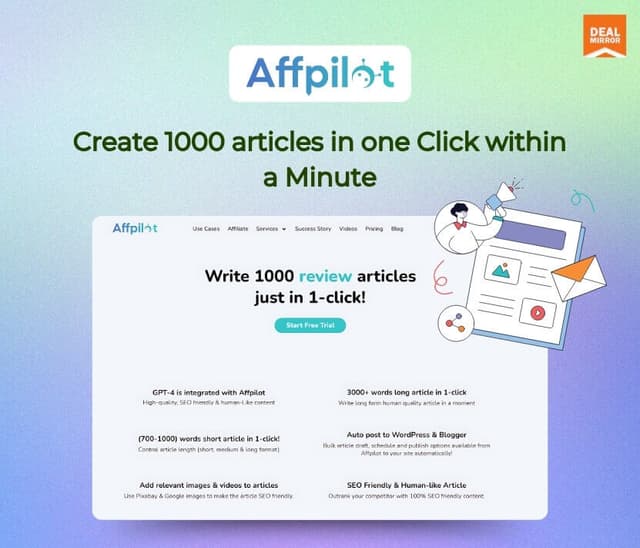
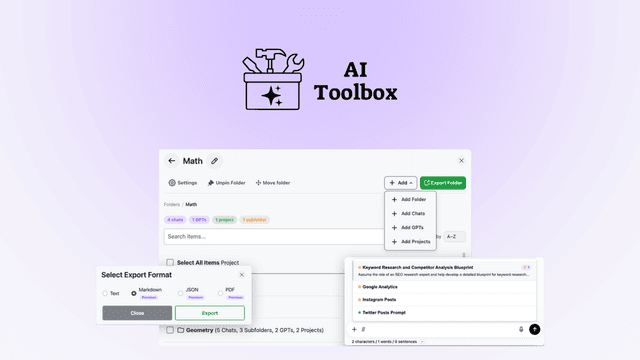
Bounded utility tools are the safest slice. Something that does one clear job, such as Affpilot AI for content generation, has predictable token costs the vendor can price around, which makes the lifetime math survivable for both sides. Multi-tool bundles like AI Toolbox can be worth it too, as long as you read them as a convenience layer over models rather than a bet that any single feature lasts forever. Browse the AI category with that lens and the sticker-price traps start to separate from the genuine deals fairly quickly.
The tools I'd be most cautious about are the ones selling unlimited high-volume generation to power users, the ones with no visible development activity, and the ones that won't tell you which underlying models they use. Opacity about the model is usually opacity about the margin.
A five-minute check before you buy
Before you enter a card, spend five minutes on this. Find the founder's name and whether they've shipped anything before. Read the usage terms specifically for the words "fair use," "credits," or "reasonable," because those are the levers they'll pull later. Check the changelog or update log for activity in the last 60 days. Confirm the tool names its models and ideally supports more than one. And run the token math in your head: if this thing is expensive to operate and sold as unlimited, assume the terms will change and decide whether it's still worth it as a one-year tool.
Do that and you'll pass on maybe half the AI deals you look at, which is roughly the right hit rate for this category. The other half are genuinely useful software at a price the subscription model can't touch, right up until the model underneath them moves. Buy accordingly, and if you want the safer end of the shelf, the vetted picks in the full software directory are a better starting point than whatever's trending on a marketplace this week.
The founders who get burned aren't the ones who bought AI lifetime deals. They're the ones who bought them believing "lifetime" meant the tool, rather than the vendor's runway. Know which one you're actually paying for.