

Marketing · Lifetime deal
Savannabay
One workspace for keyword research, competitor gaps and AI-search visibility tracking.
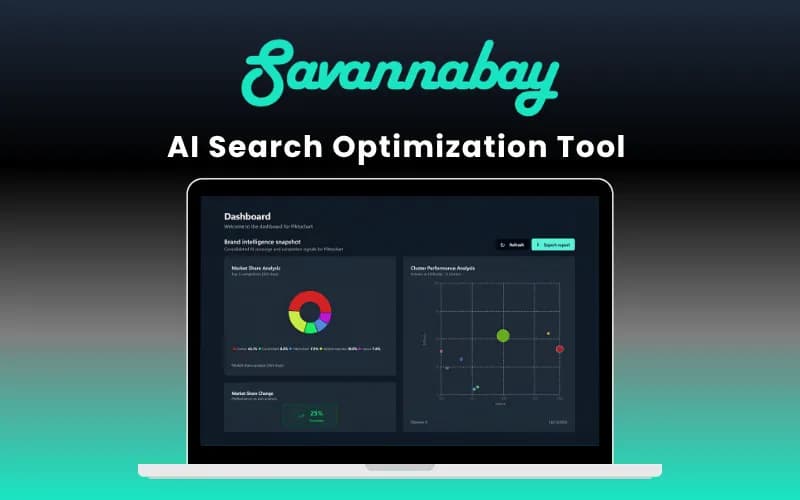
Savannabay at a glance
- Platform
- Web
- Redeem
- The coupon code is valid for 30 days. Each code works for one user or account.
- Upgrades
- Coupon codes cannot be stacked.
- Support
- Support and updates are listed as free.
Our take
Is Savannabay worth buying?
Based on the DealFuel listing, this is the entry lifetime tier of an AI-search and keyword tool with 1 brand and 200 monthly credits. It suits a single brand tracking AI visibility. Article generation requires a higher tier.
Good fit if
- You want to see if AI assistants mention your brand.
- You want keyword data and content planning together.
- You are comfortable bringing your own keys.
Skip it if
- You need article generation on the entry tier.
- You track many brands.
Which Savannabay plan do you need?
Prices in USD, excluding tax.
| Tier 1 | Tier 2 | Tier 3 | |
|---|---|---|---|
| One-time price | $129 | $259 | $499 |
| Regular price (DealFuel) | Not stated | Not stated | |
| You save | $10 | ||
| Brands | 1 | Not stated | Not stated |
| Credits / month | 200 | Not stated | Not stated |
| Article generation | Not included | Not stated | Not stated |
| Bring your own keys | Included | Not stated | Not stated |
Before you buy: DealFuel's terms and extra costs
- Refund. DealFuel lists a 30-day refund.
- Redeem. The coupon code is valid for 30 days. Each code works for one user or account.
- Upgrades. Coupon codes cannot be stacked.
- AI usage cost. Credits apply by tier. Bring your own keys (BYOK) is included, so your AI provider bills usage.
- Support. Support and updates are listed as free.
- Platform. Runs in the browser.
What is Savannabay?
Savannabay combines keyword research, AI-search visibility tracking and content planning in one workspace. It checks whether AI assistants such as ChatGPT, Perplexity, Gemini and Claude mention your brand, finds content gaps against competitors and suggests content to target. The DealFuel deal is a one-time lifetime license with monthly credits and a brand limit per tier.
What Savannabay says it does
- Tracks brand and competitor mentions in AI search answers
- SEO keyword explorer with Blue Ocean recommendations
- MCP content generation, with BYOK in every tier
- Works with ChatGPT, Claude, Gemini and Perplexity
Why Savannabay
Classic SEO tools do not show whether AI assistants cite your brand. Savannabay adds that view next to keyword data. Features run on monthly credits, article generation is only in the higher tiers, and you supply your own keys.
How does Savannabay work?
Redeem
Use your DealFuel coupon code within 30 days.
Add a brand
Enter your brand and competitors.
Research
Explore keywords and AI questions in your niche.
Track
Watch brand and competitor mentions in AI answers.
Create
Plan and generate content from the recommendations.
Then it handles:
- Keyword research
- Finding AI-search questions
- Tracking brand and competitor mentions
- Finding content gaps
- Planning content
- Generating content through MCP
- Dashboards and analytics
Who is Savannabay for?
Built for
- SEO and content teams adding AI-search visibility
- Agencies tracking several brands
- Marketers who want keyword and AI data in one place
Not for
- Anyone who needs article generation on the entry tier, since it is in Tiers 2 and 3 only
- Users who do not want to supply their own API keys
What is included in Savannabay?
Research
- SEO Keyword Explorer
- AI Questions and Answers
- Blue Ocean Recommendations
Tracking
- Brand and competitor mentions
- Dashboard and analytics
Content
- MCP content generation
- Content library
- Step-by-step workflow
- Article generation Tiers 2 and 3
Video review
We have not reviewed Savannabay on video yet.
Get notifiedBuyer reviews
No reviews yet. Bought Savannabay? Add it to your workspace and share what it replaced.
Add to your workspaceSavannabay questions
What is Savannabay?
A web tool for keyword research, AI-search visibility tracking and content planning, made by Febracorp Education LLC.
What does the entry tier include?
DealFuel lists 1 brand and 200 credits a month.
Is article generation included?
Only in Tiers 2 and 3 per the page.
Can I stack codes?
No. Coupon codes cannot be stacked.
What is the refund policy?
DealFuel lists a 30-day refund.
Do I need my own keys?
The page lists BYOK in every tier.
Often compared with
These are other tools in the same space, not deals on GrabLTD.
- Ahrefs
- Semrush
- Frase
- Profound
- Otterly.ai
Sources
Checked . Prices and terms on this page come from: