

Ahrefs is one of the best SEO tools ever built. It is also priced for agencies that bill SEO back to clients, not for a solo founder checking rankings between support tickets. The entry Lite plan has sat around $129 a month for years, which lands north of $1,500 a year before you have earned a single euro from the traffic it helps you find.
So the question a bootstrapper actually asks is narrower than "what is the best SEO tool." It's this: which parts of Ahrefs do you touch every week, and can a one-time purchase cover those parts well enough that you never think about the subscription again?
The answer splits cleanly down the middle, and pretending otherwise is how people end up disappointed. Keyword research, rank tracking, and on-page auditing are commodities now. Plenty of lifetime tools do them at 80% of Ahrefs' quality. Backlink intelligence is not a commodity. It rests on a crawler that has been indexing the web for over a decade, and no $99 deal is going to replicate that. The useful move is to split your stack along that line instead of hunting for one tool that does everything.
What you're actually paying Ahrefs for
Open your Ahrefs account and look at what you used last month. For most solo founders the honest list is short: a few keyword lookups, a rank check on the ten queries that matter, and the occasional site audit before a redesign. The backlink explorer, the content gap analysis across five competitors, the enterprise-grade index refresh rates, those are the features that justify the price, and they are also the ones a one-person business rarely needs on a monthly cadence.
That gap between what you pay for and what you use is the whole argument for a lifetime tool. If your weekly usage is keyword ideas and rank tracking, you are renting a data warehouse to store a shoebox of receipts. The trick is to be ruthlessly honest about which shoebox you own, because the wrong lifetime tool is worse than a subscription you actually use.
There is a second reason the subscription math looks worse than it feels. SEO for a bootstrapped business is front-loaded. You do the heavy keyword mapping and the site audit once, near launch, and then the work settles into a maintenance rhythm of checking positions and publishing. A monthly subscription charges you the same rate during the quiet maintenance months as it did during the intensive setup weeks. A lifetime tool charges you nothing for the quiet months, which is where a solo founder spends most of the year.
Keyword research and rank tracking: the winnable categories
This is where lifetime deals genuinely compete. Keyword data mostly comes from the same handful of clickstream and search-suggest sources, so a smaller tool built on top of them can surface the same long-tail opportunities Ahrefs would. What you lose is polish and index freshness, not the underlying idea.
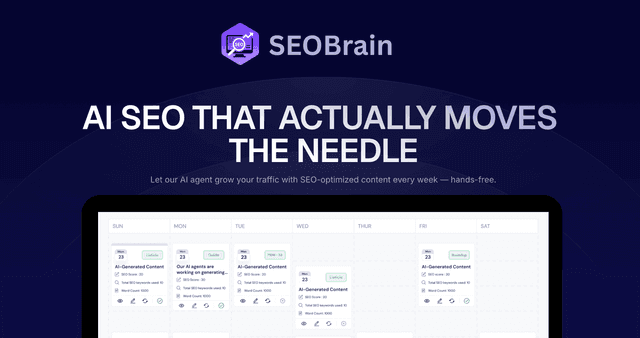
SnowSEO's lifetime plan is a reasonable anchor here. It bundles keyword research with rank tracking and reporting, which covers the two jobs a founder does most, and at a one-time price near $132 it pays for itself against Ahrefs inside two months. The SEOBrain deal plays a similar role, leaning harder into AI-assisted content briefs on top of the keyword data, which suits founders who write their own articles and want the research and the outline in one place. You can browse the current spread of these in the lifetime SEO tools directory rather than taking one tool's word for its own coverage.
The honest caveat: rank tracking on lifetime tools often checks positions less frequently than Ahrefs or a dedicated tracker. If you are watching a launch hour by hour, that lag will annoy you. If you check rankings on Monday morning with coffee, you will never notice.
One thing worth testing before you commit to any lifetime keyword tool is how it handles your actual language and country, not just the US English market its demos are built around. The clickstream data that powers keyword volumes thins out fast in smaller markets, and a tool that looks authoritative for "best crm" in the States can return near-empty results for the same query in German or Dutch. Run five real queries from your own niche during any trial window before you decide the coverage is good enough. That single test tells you more than any feature comparison table.
On-page and technical audits: also solved cheaply
Crawling your own site for broken links, thin pages, missing meta descriptions, and slow-loading templates is not hard technology. It was hard fifteen years ago. Now a lifetime crawler does it fine.
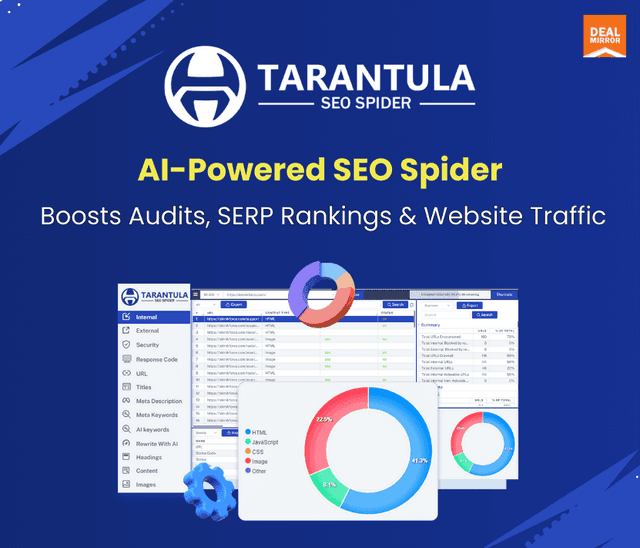
Tarantula SEO Spider is a desktop-style crawler in the mould of Screaming Frog, and for a one-time cost around $47 it will map a site of a few hundred pages and flag the usual suspects: redirect chains, duplicate titles, orphaned pages, oversized images. For a founder running a Next.js site or a WordPress blog, that is most of the technical SEO you will ever action. Run it before a redesign, run it after, compare the two crawls, fix what broke.
Where these tools fall short is ongoing monitoring. Ahrefs and its peers re-crawl continuously and alert you when something regresses. A lifetime crawler runs when you run it. That's a real difference, but for a site you touch weekly it's a difference you can absorb by making the crawl part of your own routine instead of paying someone to remember for you.
Backlink intelligence: where the lifetime story falls apart
Here is the disagreeable part, and it's worth saying plainly because most "Ahrefs alternatives" articles bury it. For backlink analysis at any real depth, lifetime SEO tools do not hold up, and buying one expecting them to is the mistake that sours people on the whole category.
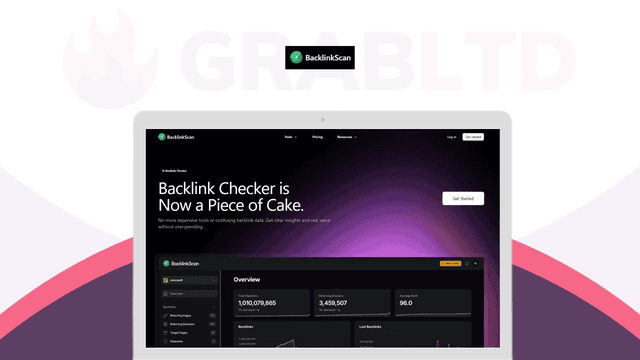
Ahrefs' backlink index is the product. It exists because they have run a web crawler at massive scale for years and stored the graph. A tool that launched two years ago and sells for a flat $99 has not crawled the web. It usually licenses a backlink dataset from a third party, refreshes it slowly, and shows you a fraction of the links Ahrefs would. BacklinkScan, at roughly $99 one-time, is genuinely useful for the job most founders have, which is checking your own backlink profile and spotting toxic or lost links. It is not useful for the job Ahrefs owns, which is reverse-engineering a competitor's entire link-building strategy across thousands of referring domains.
So the split is this. If you need to audit your own links and keep an eye on a couple of competitors, a lifetime tool like BacklinkScan covers it. If backlink intelligence is central to how you win, meaning you are doing outreach at scale or working link-heavy niches, keep a real subscription for that one job and cancel it the month you are done. Renting Ahrefs for a focused three-month campaign is a defensible expense. Paying for it year-round because you check your own links twice a month is not.
How to actually split the stack
The practical setup for a solo founder looks like a permanent lifetime base with a rented top layer you switch on only when a specific project demands it.
Your permanent base handles the weekly work: a keyword and rank tool such as SnowSEO or SEOBrain, and a crawler such as Tarantula SEO Spider for audits. Add BacklinkScan for routine link monitoring. That covers keyword research, tracking, on-page audits, and basic backlink hygiene for a combined one-time cost that lands well under what Ahrefs charges for four months.
Then, only when a project genuinely needs deep competitor link data, you pay for one month of a heavyweight subscription, extract what you need, and cancel. Most founders find they do this once or twice a year, not twelve times. Ahrefs even sells a lower Starter tier now, added in recent years at a fraction of the Lite price, which makes the rent-it-briefly play cheaper than it used to be. The point stands either way: you rent the depth for the weeks you need it and own the routine work forever.
A worked example makes the split concrete. Say you launch a niche SaaS in January. In the first month you buy SnowSEO for keyword research and rank tracking, Tarantula SEO Spider to audit the marketing site before it goes live, and BacklinkScan to watch your own link profile as you start outreach. That is a single afternoon of purchases and maybe $280 total, paid once. Through the rest of the year you open those three tools most weeks and pay nothing more. In September, when you decide to reverse-engineer how two competitors built their links, you rent one month of a full backlink subscription, pull the referring-domain list into a spreadsheet, plan a quarter of outreach off it, and cancel. Your total SEO tooling spend for the year lands near $400. The all-subscription version of that same year clears $1,500 on the entry tier alone.
The math is not subtle. Four lifetime tools bought once might total somewhere around $350. Ahrefs Lite across three years runs past $4,500 at the monthly rate. Even if the lifetime tools are collectively 75% as capable, you are keeping thousands of euros in the business and accepting a gap you will feel maybe twice a year. For a founder deciding between a subscription and rent money, that trade is not close.
The one risk worth pricing in
Lifetime SEO tools carry the same vendor-longevity risk as any lifetime deal. A small tool built on a licensed backlink dataset is one supplier renegotiation away from a worse product. So do not build a mission-critical process on a single $99 tool. Own two overlapping options in the categories that matter to you, keep your keyword lists and reports exportable, and treat any single lifetime tool as replaceable rather than permanent infrastructure.
That caution aside, the category has matured. The keyword, tracking, and audit jobs that used to justify an Ahrefs subscription for a one-person business genuinely don't anymore. Pay once for those, rent depth only when a campaign earns it, and keep the difference where it belongs, in your runway.