

You have a working product, no customers, and a pricing page with a blinking cursor where the number should go. Every pricing framework worth reading assumes inputs you do not have yet: conversion by tier, churn by cohort, willingness-to-pay data from a segment that does not exist. So most founders take the safe move and pick $29 a month, because $29 is what everyone picks.
The problem with $29 is not that it is too low. It is that nothing produced it. You cannot explain it to a prospect, you cannot learn anything when it underperforms, and a bad first month tells you nothing about whether the price or the product is at fault.
Pricing before you have customers is not a maximisation problem. It is a positioning bet you need to be able to re-run.
Your first price is a hypothesis, not a decision
Here is the position that reliably annoys people who price for a living: your first pricing decision is going to be wrong, so set the number to make iteration cheap rather than to maximise day-one revenue.
That sounds like permission to underprice. It is not. A price you can move is worth more than a price that happens to be right this quarter, because right is a moving target and you are aiming at it blindfolded. The founders who get stuck are the ones who lock their guess into place before they know anything: annual contracts signed at the wrong number, a lifetime tier sold to buy runway, four pricing dimensions that each need separate justification.
Every one of those decisions converts a reversible mistake into a permanent one. You want the opposite. Guess, ship, watch what happens in sales conversations, and change the number while changing it is still free.
So the useful question is not "what is my product worth?" You cannot answer that yet. The question is "what number can I defend in a sales call, and how hard will it be to replace in ninety days?"
Three anchors will give you a defensible starting number. None of the three requires data you do not already have sitting in your head or in a browser tab.
Anchor one: what they already spend on the problem
Your prospect is solving this problem today. They are doing it badly, manually, and at a cost they have almost certainly never added up, but the problem is getting handled somehow without you in the picture. Whatever that workaround costs is your first anchor.
Sometimes the substitute is a person. If your tool replaces four hours a week of a virtual assistant doing data entry, the customer is already paying somewhere in the region of a few hundred a month for that outcome, and you can name the comparison directly in a sales conversation. Sometimes the substitute is a stack of tools. Someone cobbling together a form builder, a spreadsheet, and a Zapier connection to move leads around is paying three subscriptions and a maintenance tax in their own time.
Add up the substitute. That total is not your price, but it tells you which order of magnitude you are in, which is the decision that actually matters. Charging $19 when the alternative is a $600-a-month contractor is not aggressive pricing, it is a signal that your product cannot possibly do the job.
The failure mode here is anchoring against free. If the honest substitute is a spreadsheet the customer already owns, substitute-spend gives you a floor near zero and you need one of the other two anchors instead.
Anchor two: the money you make or save them
Value-anchored pricing is the one every consultant recommends and the one most likely to mislead you pre-launch.
The logic is clean. Work out the value your product creates for a specific customer, then ask for a defensible slice of it, usually somewhere around ten percent. Recover $2,000 a month in failed payments, charge $200. Save a founder six hours a week at a realistic hourly rate, price against that.
There is a second-order trap in the arithmetic. Ten percent of value created assumes the customer agrees with your estimate of the value, and buyers systematically discount benefits they cannot see on a bank statement. Recovered revenue survives that test because it shows up as money arriving. Hours saved usually does not, because the founder you are selling to does not fire anyone when you give them back six hours, so the saving stays theoretical and their willingness to pay reflects that. Price against the number your buyer can point at.
It works when the outcome is measurable and attributable to you. Payment recovery, ad spend saved, hours logged against a rate the customer already accepts. It falls apart when the value is diffuse, when the customer would not have captured that value anyway, or when attribution is arguable. And before you have customers, you are estimating the value from your own imagination, which is not a neutral source.
Use it as a ceiling check rather than a price setter. If your competitor-anchored number lands above ten percent of the value you plausibly create, you have a problem no amount of positioning will fix. If it lands well below, you have room, and that room is the most useful thing you can know going into your first fifty conversations.
Anchor three: sit 30% under the incumbent and own the gap
Most niches have one dominant subscription product everyone already knows. Whether or not you invite the comparison, your prospects are running it in their heads within the first thirty seconds of landing on your pricing page, and the number they are carrying into that moment belongs to the incumbent.
Price meaningfully below it and make the gap the story. Around 30% is the useful band. It is enough that a buyer notices and repeats the number to a colleague, and not so much that you look like you will be gone within a year. Undercut by 70% and the buyer starts wondering what got cut, whether support exists, and whether they will be migrating again in eighteen months. Cheap reads as unstable once the discount gets silly.
The gap also needs a reason. "Same thing, less money" invites the incumbent to close it. "We do the four things you actually use, we skip the enterprise layer you are paying for, and that is why we cost less" is a position, and positions survive a price war better than discounts.
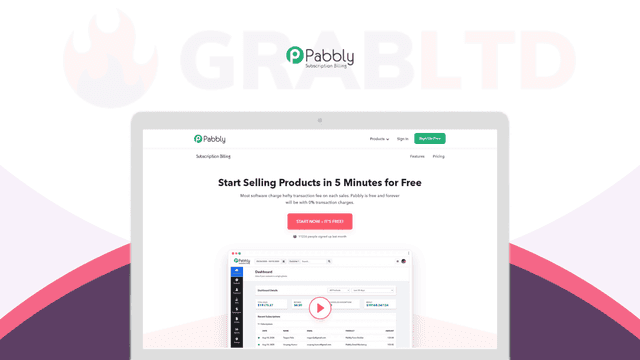
This is the same dynamic that makes lifetime software deals legible in the first place. A buyer looking at Pabbly Subscription's lifetime plan at $249 is not evaluating $249 in a vacuum. They are comparing it against a recurring billing product they already pay for monthly, and the one-time number does the arithmetic for them. Anchoring against a known price is what makes an unknown price feel safe.
Price so the second price is possible
Once you have a number from those three anchors, most of the remaining work is protecting your ability to change it.
Start monthly, not annual. Annual billing is a great business once you know your price and a trap before then, because it locks a guess in for twelve months and every renewal becomes a renegotiation you did not plan for. Keep the tier count low, two or three at most, since every tier is another thing to re-justify when you move. Say in writing that early customers keep their price, and then honour it. Grandfathering is cheap when you have eleven customers and it buys you the freedom to raise the number for customer twelve without a public argument.
Resist selling a lifetime tier on your own SaaS to fund the early months. It converts recurring revenue into a one-time payment and a permanent support obligation, and it removes the pricing experiment entirely. Buying someone else's lifetime deal as a customer is a reasonable trade. Selling your own before you understand your cost to serve is a different bet, and it is one you lose slowly.
The billing stack decides how cheap iteration is
None of this survives if changing a price means a week of engineering. When a price change is expensive, founders stop making them, and the wrong number becomes permanent through friction rather than choice.
Work out what a price change costs you before you need to make one. Can you create a new plan without touching application code? Can existing customers sit on the old plan indefinitely, without somebody hand-editing a database row every time one of them renews? Can you run two prices side by side while you test? If the answer to any of those is no, fix that before you fix the number.
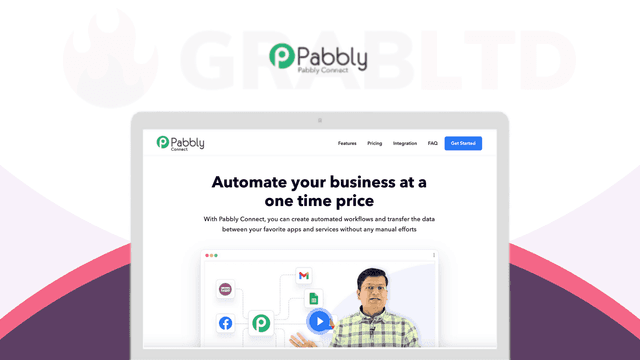
The tooling here is unglamorous and worth buying once. Subscription and checkout platforms handle plan versioning, proration, and grandfathering so you are not writing that logic yourself, and several of them show up on lifetime terms. Pabbly Subscription at $249 and ThriveCart at $790 both cover recurring billing and checkout as one-time purchases, and Pabbly Connect at $349 handles the plumbing between billing events and whatever else you run, so a plan change does not mean rewriting your onboarding. The rest of the sales and checkout catalogue is worth a scan before you commit to a subscription that scales with revenue you do not have yet.
Pick your anchor, defend the number in the next ten sales conversations, and pay attention to which objection repeats. Nobody flinching means you are too cheap. Everybody flinching means the price is ahead of the proof. The number you launch with is not the one you keep, and the whole job right now is making sure that swap costs you an afternoon instead of a quarter.