
Productivity · Lifetime deal
Bookster
Short book summaries, AI quizzes and a focus timer that blocks distracting apps.
Bookster at a glance
- Platform
- Mobile app
- Upgrades
- You can upgrade while the deal is live. Downgrades are allowed only within 60 days of purchase.
- Note
- For new Bookster users only. Future AI models may come at a discount or require an add-on.
- Support
- The vendor is expected to respond within 24 hours.
Our take
Is Bookster worth buying?
Based on the AppSumo listing, Bookster is a gamified learning app and this entry tier is capped at 5 AI summaries a month. It suits new users who want short lessons with focus tools. AppSumo shows the deal as sold out and the page does not name a platform.
Good fit if
- You want short lessons and quizzes you can finish daily.
- You want your own files turned into quizzes.
- You want an app that blocks distractions while you learn.
Skip it if
- You already have a Bookster account.
- You need the deal now, since it shows as sold out.
Which Bookster plan do you need?
Prices in USD, excluding tax.
| Lifetime deal | |
|---|---|
| User licenses | 1 |
| AI summaries and paths | 5 / month |
| Daily lessons (non-AI) | Unlimited |
Before you buy: AppSumo's terms and extra costs
- Refund. Refundable within 60 days through AppSumo. Plus members also get the We Got Your Back guarantee.
- Redeem. Activate your license within 60 days of purchase.
- Upgrades. You can upgrade while the deal is live. Downgrades are allowed only within 60 days of purchase.
- Note. For new Bookster users only. Future AI models may come at a discount or require an add-on.
- Support. The vendor is expected to respond within 24 hours.
What is Bookster?
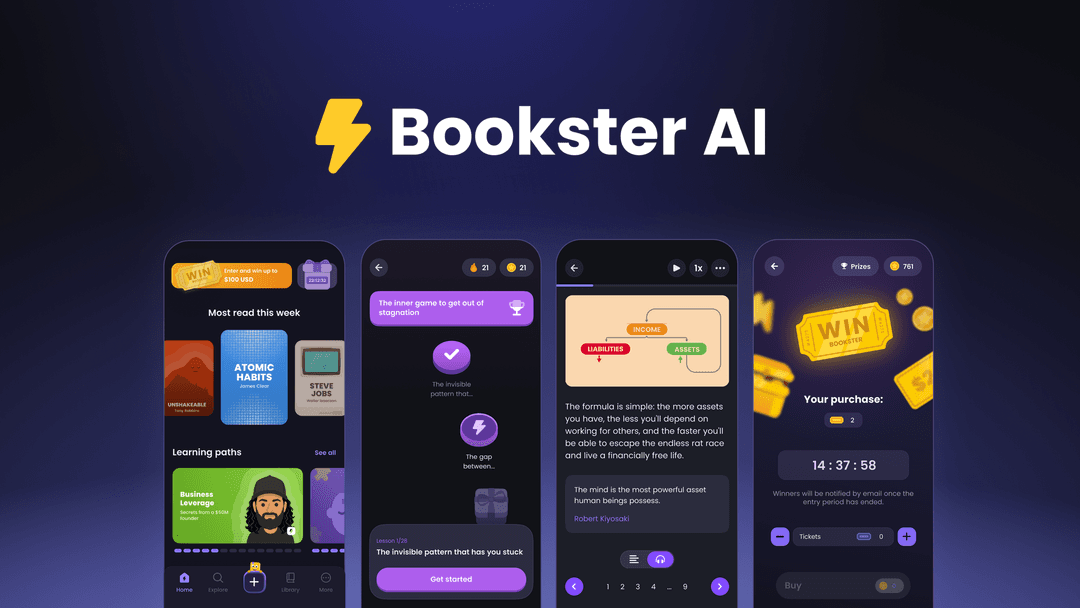
Bookster is a learning app with short book, podcast and TED Talk summaries, three to seven minute lessons and AI-generated quizzes. A focus timer blocks distracting apps such as TikTok while you study. You earn coins for daily streaks and can spend them on lottery tickets. The AppSumo deal is for new Bookster users only.
What Bookster says it does
- Book, podcast and TED Talk summaries with short lessons
- AI summaries and quizzes from your own documents, videos or prompts
- Blocks distracting apps while you learn
- Coins earned from streaks can be spent on daily lottery tickets
Why Bookster
Reading goals stall when your phone offers easier options. Bookster pairs short lessons and quizzes with app blocking and rewards. The page does not state a platform clearly, and AppSumo shows the deal as sold out.
How does Bookster work?
Redeem the code
Buy on AppSumo and activate the license within 60 days.
Pick a goal
Choose summaries, a learning path or a 30-day course.
Learn and take quizzes
Read or listen to a lesson, then answer the AI quiz.
Stay focused
Use the focus timer to block distracting apps and keep your streak.
Then it handles:
- Reading short book summaries
- Following structured learning paths
- Quizzing yourself with AI
- Making summaries from your own files
- Blocking distracting apps
- Tracking daily goals and streaks
Who is Bookster for?
Built for
- Busy readers who want short lessons
- People who lose focus to social apps
- Learners who want quizzes on their own material
Not for
- Existing Bookster users, since the deal is for new users only
- Buyers who need the deal now, since AppSumo shows it as sold out
- Anyone who wants a long-form reading app
What is included in Bookster?
Content
- Summaries books, podcasts and TED Talks
- Short lessons and 30-day courses
- Learning paths
AI tools
- AI summaries and quizzes from documents, videos or prompts
- AI mentor
- Real-time trivia
Focus and rewards
- App blocking
- Daily goals and streaks
- Coins and lottery tickets
Video review
We have not reviewed Bookster on video yet.
Get notifiedBuyer reviews
No reviews yet. Bought Bookster? Add it to your workspace and share what it replaced.
Add to your workspaceBookster questions
What is Bookster?
A learning app with short summaries, lessons and AI quizzes, plus a focus mode that blocks distracting apps.
What are the entry tier limits?
Per the page, Tier 1 has 1 user license and 5 AI summaries and paths a month. Tiers 2 to 4 list unlimited AI summaries. Daily non-AI lessons are unlimited.
Is the deal for existing users?
No. It is for new Bookster users only.
Is the deal available?
AppSumo shows it as sold out, with a notify option.
What is the refund policy?
Refundable within 60 days, and the license must be activated within that window.
Which devices does it run on?
The page does not state this directly. It is described as an app and blocks other apps, which suggests mobile. Confirm with the vendor.
Often compared with
These are other tools in the same space, not deals on GrabLTD.
- Blinkist
- Headway
- Shortform
- Readwise
- Duolingo
Sources
Checked . Prices and terms on this page come from: