
Design · Lifetime deal
Floto.ai
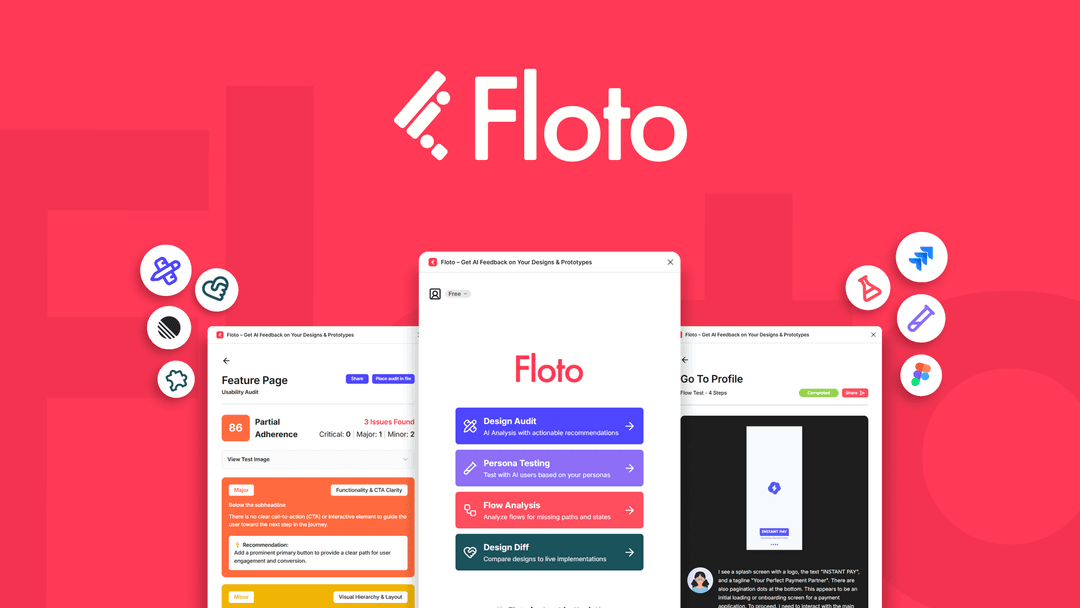
AI design audits inside Figma that score screens, test personas and compare designs with the live build.
Floto.ai at a glance
- Platform
- Figma, Chrome
- Upgrades
- Upgrades are allowed while the deal is live. Downgrades are possible within 60 days of purchase. Future updates to the plan are included.
- Support
- The vendor is expected to respond within 24 hours. There is a Discord community and a changelog.
Our take
Is Floto.ai worth buying?
Based on the AppSumo listing, this is an AI design audit plugin for Figma with a Chrome extension for live pages. Our tier is the entry license with 1,500 credits a month and one seat. The listing is marked sold out, and the company is at an early stage.
Good fit if
- You design in Figma and want fast AI feedback before research.
- You want to check shipped builds against your designs.
- You are a small team without a research budget.
Skip it if
- You need feedback from real users.
- You need more than one seat on the entry tier.
Which Floto.ai plan do you need?
Prices in USD, excluding tax.
| License Tier 1 | |
|---|---|
| Credits per month | 1,500 |
| Seats | 1 |
| Plan level | Pro |
Before you buy: AppSumo's terms and extra costs
- Refund. Refundable for up to 60 days through AppSumo.
- Redeem. Activate your license within 60 days of purchase.
- Upgrades. Upgrades are allowed while the deal is live. Downgrades are possible within 60 days of purchase. Future updates to the plan are included.
- Support. The vendor is expected to respond within 24 hours. There is a Discord community and a changelog.
- Usage cost. Usage runs on monthly credits set by your license tier.
- Platform. Figma plugin and Chrome extension.
What is Floto.ai?
Floto.ai is a Figma plugin that audits your designs with AI. It scores screens for usability and accessibility, tests them against generated personas, finds missing empty, error and loading states, and compares Figma frames with the live build. A Chrome extension audits live web pages without a Figma file. Usage runs on monthly credits that depend on the license tier.
What Floto.ai says it does
- Scores frames for usability, accessibility and copy, with a prioritized fix list
- Design Diff compares Figma designs with the live build
- Live web page audits through the Chrome extension, with no Figma file needed
- Fixes come with prompts for Cursor or Claude Code, or can be sent to Jira or Linear
Why Floto.ai
Real user testing is slow and costly to schedule. Floto.ai gives quick AI feedback on the canvas before research sessions. It is an AI review and not a replacement for testing with real people. It is a young product from a small team, and credits are capped each month.
How does Floto.ai work?
Activate the license
Activate your AppSumo license within 60 days of purchase.
Install the plugin
Add the plugin from Figma Community, or the Chrome extension.
Run an audit
Select frames and run a design audit or persona test.
Fix the gaps
Work through the ranked fixes or send them to Jira or Linear.
Then it handles:
- Scoring screens for usability and accessibility
- Testing designs against AI personas
- Finding missing empty, error and loading states
- Comparing Figma frames with the shipped build
- Flagging hardcoded styles against design tokens
- Auditing live web pages
Who is Floto.ai for?
Built for
- Product designers who work in Figma
- Small teams without a research budget
- Designers who want to check shipped builds against designs
Not for
- Teams that need results from real user testing
- Anyone who needs this deal now, since the listing is sold out
- Designers who do not use Figma or Chrome
What is included in Floto.ai?
Audits
- Design audits usability, accessibility and copy
- Persona testing AI personas react to screens
- Flow analysis missing states and simulated tasks
Design to build
- Design Diff spacing, type, color, sizing
- Design System Check flags hardcoded styles
- Live page audits Chrome extension
Video review
We have not reviewed Floto.ai on video yet.
Get notifiedBuyer reviews
No reviews yet. Bought Floto.ai? Add it to your workspace and share what it replaced.
Add to your workspaceFloto.ai questions
What is Floto.ai?
An AI design audit tool that runs inside Figma. It scores screens, tests them against personas and flags gaps, then helps check the build against the design.
Does it need Figma?
Design audits run in the Figma plugin. Live web page audits run through the Chrome extension and need no Figma file.
How do credits work?
Each license tier includes a monthly credit allowance. The AppSumo page lists the allowance per tier.
Is the deal still available?
The AppSumo page shows the deal as sold out, with an option to be notified if it returns.
What is the refund policy?
AppSumo lists a 60-day refund. Activate the license within 60 days.
Does it replace user testing?
No. It gives AI feedback before research, and it is not a substitute for testing with real people.
Often compared with
These are other tools in the same space, not deals on GrabLTD.
- Hotjar
- Maze
- UserTesting
- Attention Insight
- Uxcel
Sources
Checked . Prices and terms on this page come from: