
Productivity · Lifetime deal
Uspacy
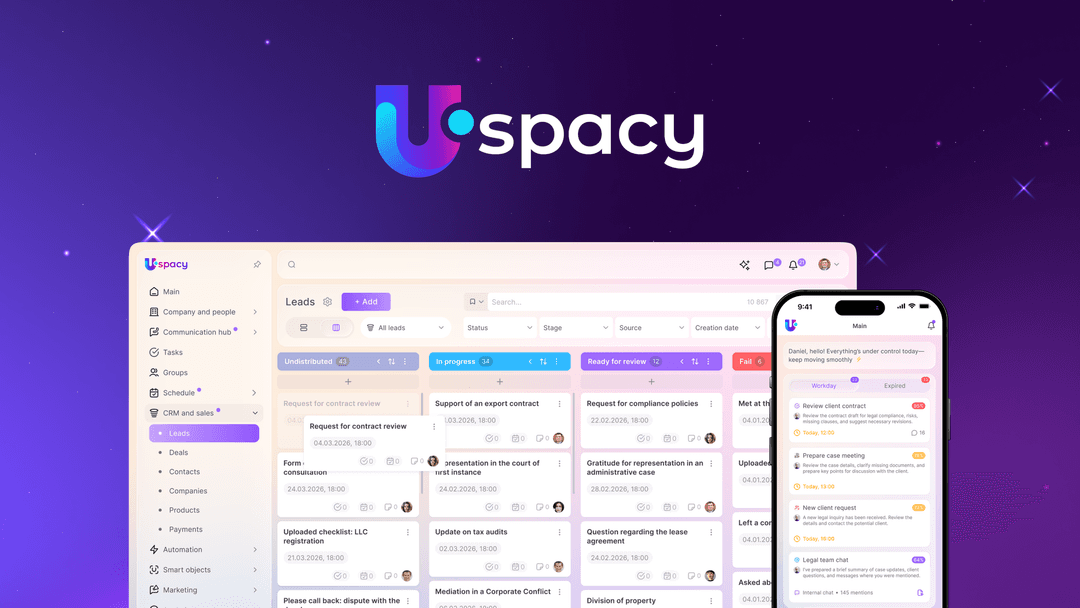
CRM, tasks, team chat and calls in one workspace, with AI summaries and an open API.
Uspacy at a glance
- Platform
- Web, iOS
- Upgrades
- No codes and no stacking. You can move between the 4 tiers.
- Support
- Vendor expects to respond within 24 hours.
Our take
Is Uspacy worth buying?
Based on the AppSumo listing, this is the lowest tier of a lifetime CRM and task workspace for 5 users. The page showed the deal as sold out when checked, so confirm availability first. It is open only to new Uspacy accounts.
Good fit if
- You want a CRM, tasks and chat in one workspace.
- You want AI summaries of calls and messages.
- You are a small team of up to 5 users.
Skip it if
- You already have a Uspacy account.
- You need more than 5 users on this tier.
Which Uspacy plan do you need?
Prices in USD, excluding tax.
| License Tier 1 | |
|---|---|
| Users | 5 |
| User roles | 4 |
| Storage | 100 GB |
| Emails | 1,000 |
| External users | 0 |
Before you buy: AppSumo's terms and extra costs
- Refund. 60-day money-back guarantee through AppSumo, per the listing.
- Redeem. Activate your license within 60 days of purchase. New Uspacy users only.
- Upgrades. No codes and no stacking. You can move between the 4 tiers.
- Support. Vendor expects to respond within 24 hours.
- Platform. Web app plus a mobile app on the App Store.
What is Uspacy?
Uspacy is a workspace that combines a CRM, task manager, team chat, telephony and a website chat widget under one login, with an open API. AI tools summarize calls and chats and create tasks from them. It supports workflow automation, fillable forms, document generation and a mobile app. The listing's lowest lifetime tier covers 5 users and 100 GB of storage.
What Uspacy says it does
- CRM with multiple deal funnels, tasks and workflow automation
- AI call and chat summaries that create tasks
- Webhooks, API and MCP
- Free migration from other CRMs
Why Uspacy
Small teams often run a CRM, tasks and chat in separate tools. Uspacy puts them in one workspace and uses AI to turn calls and messages into follow-ups. The deal is for new Uspacy users and the AppSumo page currently shows it as sold out.
How does Uspacy work?
Redeem the license
Activate your AppSumo license within 60 days if the deal returns.
Set up the workspace
Add users, roles and your deal funnels.
Connect channels
Link messengers, calls, email and the chat widget.
Automate
Use workflows and AI summaries to create tasks.
Then it handles:
- Managing deals in a CRM
- Assigning and tracking tasks
- Team chat and email
- Logging calls with telephony
- Creating tasks from AI summaries
- Generating documents and forms
- Automating workflows
Who is Uspacy for?
Built for
- Small teams replacing a separate CRM and task tool
- Sales teams that log calls and messages
- Teams that want an API and automations
Not for
- Existing Uspacy users, as the deal is for new accounts only
- Teams needing more than 5 users on the entry tier
- Buyers who need the deal available now, since it shows sold out
What is included in Uspacy?
CRM and tasks
- Deal funnels
- Task manager
- Workflow automation
- Analytics report builder
Communication
- Team chat and email
- Telephony and call logs
- Website chat widget
- Social and messenger channels
Platform
- AI summaries calls and chats to tasks
- API, webhooks and MCP
- Mobile app
- Free CRM migration
Video review
We have not reviewed Uspacy on video yet.
Get notifiedBuyer reviews
No reviews yet. Bought Uspacy? Add it to your workspace and share what it replaced.
Add to your workspaceUspacy questions
What is Uspacy?
A workspace that combines a CRM, tasks, team chat, telephony and AI summaries, with an open API.
What does the entry tier include?
Per the listing, Tier 1 has 5 users, 4 user roles, 100 GB of storage and 1,000 emails.
Is the deal available?
The AppSumo page showed the deal as sold out with a notify option when checked.
Can I stack codes?
No. The listing says no codes and no stacking. You can switch between the 4 tiers.
Who can buy it?
Only new Uspacy users without existing accounts, per the listing.
Often compared with
These are other tools in the same space, not deals on GrabLTD.
- HubSpot
- Pipedrive
- Zoho CRM
- Bitrix24
- Monday.com
Sources
Checked . Prices and terms on this page come from: