
Software pricing gets expensive in the gap between the quote and the hiring plan. A $99 lifetime license looks flat. Then user 11 arrives. A spreadsheet database sold by code can expose every internal user before tax. A self-hosted WordPress plugin can keep assignee charges at zero while your hosting bill quietly becomes the real cost driver.
The practical fix is a 36-month seat-cost forecast. It does not need a finance model that predicts everything. It needs one headcount plan, three cost categories and a date for each capacity trigger. The figures below use GrabLTD product pages last checked 1 October 2026, so treat every price and term as a dated input and reconfirm it before checkout.
Start with the number that can break the forecast
Open one row per product and fill in the following fields:
| Forecast field | What to record |
|---|---|
| Product and plan | The exact tier, billing unit and delivery model |
| One-time base price | The purchase price before tax |
| Current internal users | The people who need an included seat today |
| Planned headcount | Hiring month and user count for months 12, 24 and 36 |
| Cost classification | Fixed-seat, code-per-user or site-based |
| Capacity trigger | The user, code or site count that changes the bill |
| Extras | Add-ons, model usage, hosting and support costs |
| Purchase terms | Refund window and redemption deadline |
Use month 0, 12, 24 and 36 as checkpoints, then insert the actual hiring months between them. If a date is uncertain, use the earliest plausible month. Optimistic staffing makes a cap look harmless for longer than it really is.
For a one-time license, place the cash outlay in the month you buy it. For a subscription, add the recurring charge to that month and every later month. Keep taxes on their own line. A forecast that mixes tax into the vendor price is harder to audit when the tax rate changes.
Mark the month in which each threshold is crossed. A 10-user allowance breaks when user 11 joins, full stop. A one-site license breaks when site 2 is required, while a one-code-per-user product changes when another code is needed. Capacity limits belong beside the price, not in a note you hope nobody reads.
Classify the pricing unit before you total it
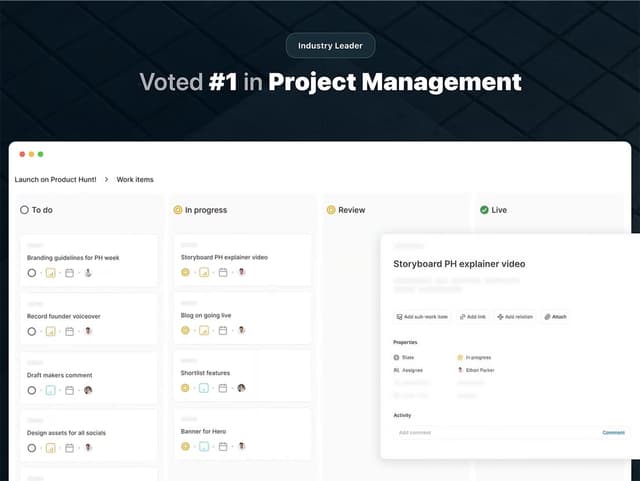
A fixed-seat or capped allowance has one price for a defined number of users. Lyra is a capped fixed-seat example: $99 before tax for one payment, up to 10 team members and unlimited projects.
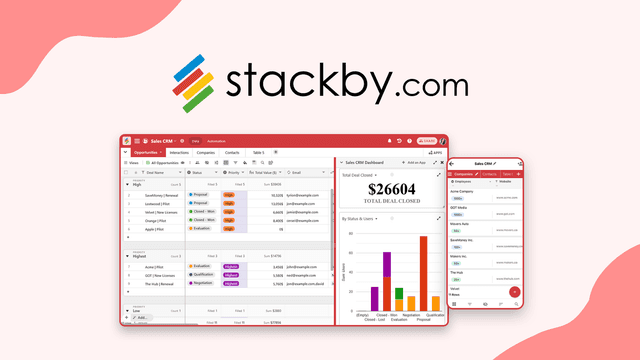
A code-per-user product sells license units that each add a user and raise other limits. Stackby follows that model. One code is $109 and covers one user; four codes are $436 and cover four users. That is the model.
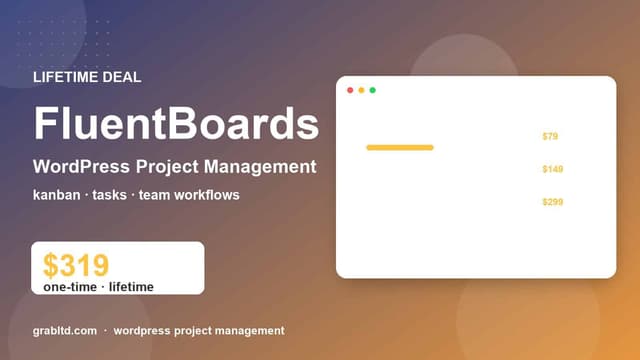
A site-based product prices the number of places the software runs, not the number of people using it. FluentBoards is the clearest example, with lifetime tiers for one, five or unlimited sites.
| Product | Cost model | Published price before tax | What increases the cost | Capacity trigger |
|---|---|---|---|---|
| Lyra | Capped fixed-seat | $99 one time | Moving beyond 10 users | 11th user |
| Stackby | Code-per-user | $109 per code; $436 for four | Another code or paid add-on | Each added user; 10-code stack ceiling |
| FluentBoards | Site-based | $319 for one site; $639 for five; $1,279 unlimited | Another site | Second site, then sixth site |
Do not convert a site price into a fake per-seat figure and pretend it behaves like a per-user license. It does not. The harsher truth is that a site license can look expensive per head today, yet remain the only route here whose price does not punish headcount growth.
Read each cost curve before filling in the forecast
Lyra's curve is flat and then stops. At $99 before tax, it covers up to 10 team members with unlimited projects. The listed workspace includes issue tracking, cycles, progress tracking, analytics and AI writing and summaries. It is web-based. The readable product information does not confirm particular views or integrations, so check those details if your workflow depends on them rather than assuming they are included. Your trigger date is the month the 11th person joins. No replacement price is supplied, so leave that budget line as TBD.
Stackby's curve rises in steps. One code costs $109 and covers one user, 20 stacks, 5,000 rows per stack and 4 GB of attachments per stack. Four codes cost $436 and cover four users, 25 stacks and 10,000 rows per stack. Codes can be stacked up to 10, but the detailed limits for bundles of 5 to 10 codes are not shown. Verify those limits before you promise a larger workflow to the team. Some app and automation features are not included in the listed tiers, while Powerups, an Apps Marketplace and automation runs are sold separately. That makes the code price only part of the workflow cost.
FluentBoards follows a different curve. The one-site lifetime tier is $319, the five-site tier is $639 and the unlimited tier is $1,279, all before tax. Every lifetime tier includes unlimited projects and assignees, so adding people does not raise the license price. The trade is operational: FluentBoards is a self-hosted WordPress plugin, and your team must run the WordPress environment that contains it. Include server, maintenance and administration time in the forecast rather than pretending the license is the whole cost.
Stress-test the forecast against planned hiring
Consider an illustrative team with four people today, seven in month 12, ten in month 24 and twelve in month 36. The team runs one WordPress site throughout. These numbers are a planning scenario, not a staffing prediction.
| Checkpoint | Headcount | Lyra | Stackby | FluentBoards, one site |
|---|---|---|---|---|
| Today | 4 | $99 | $436 for 4 codes | $319 |
| Month 12 | 7 | $99 | $763 for 7 codes | $319 |
| Month 24 | 10 | $99 | $1,090 for 10 codes | $319 |
| Month 36 | 12 | Cap crossed at user 11; replacement price TBD | 12 codes would equal $1,308, but the 10-code ceiling blocks it | $319 |
Stackby's arithmetic needs care. If you buy four codes today, then add codes as the team grows, 12 users would require 12 codes at $1,308. The deal allows up to 10 codes, so the published ceiling reaches 10 users for $1,090 and the two-user remainder has no purchasable code allowance within the stated stack limit. Extras are additional.
Lyra's apparent saving also has a timing problem. The $99 license works for the first ten hires, but it stops covering the team in month 36 under this scenario. You would spend $99 and still need a replacement budget that nobody can estimate from the current facts. Start the replacement review by month 24, not after the 11th person joins.
FluentBoards remains $319 for one site in this scenario because headcount does not affect its price. A second site would force the five-site tier at $639, an increase of $320. A sixth site would force the unlimited tier at $1,279. Its cost curve is flat for people, then stepped for sites.
My blunt rule: do not buy a capped tool when your own 36-month forecast crosses the cap inside the period. A discount with a known expiry is not a discount.
Budget the costs that sit outside the headline
Create three extra lines next to every product: tax, vendor extras and operating overhead. Keep unknown values as TBD. Unknown means unknown. A blank or zero assumption is not a forecast; it is a hidden decision.
| Item to verify | Lyra | Stackby | FluentBoards |
|---|---|---|---|
| Refund terms | Not stated in the readable product information | 30-day refund window listed | No refund policy stated on the pricing page |
| Redemption terms | Check the important details | Redeem within 60 days | Confirm directly with the vendor |
| Extra costs | No add-on price appears in the supplied facts | Apps, automation runs and other add-ons are separate; AI model usage responsibility is unclear | Hosting, maintenance and administration time sit outside the license |
| Other constraints | Web access only is listed | External app users are not included | WordPress is required |
For Stackby, get prices for the apps and automation runs you actually need before approving the purchase. If AI fields are part of the workflow, leave model usage as a separate unknown because the listing does not say who pays it. Do not fold a vague possible usage charge into the $109 code price.
For FluentBoards, ask whether the WordPress site and its operating costs already exist. If they do, the license may be a smaller incremental decision than the total hosting stack. If they do not, the $319 entry price is only the start of the operating commitment.
Purchase terms belong in the forecast because they affect when you can correct a bad fit. Stackby's 30-day refund window gives you a bounded correction period, while its 60-day redemption deadline sets the clock on that decision. Lyra's readable information leaves refund details unresolved, and FluentBoards states no refund policy. Confirm both directly. None of these terms should be inferred from the word lifetime.
Route the purchase by the constraint that matters
Choose Lyra for a web-based project workspace with up to 10 users, unlimited projects, issue tracking, cycles, progress tracking, analytics and AI writing or summaries. It is a clean fit while the headcount plan stays within the cap. It is a poor fit when your own hiring sheet already reaches 11.
Choose Stackby for a spreadsheet-style database serving 1 to 4 internal users, especially when linked records, forms, dashboards and automations matter more than a conventional project board. Budget the paid extras, confirm the code limits you need and treat the 60-day redemption deadline as part of the purchase plan. The listing says external app users are not included, so customer-facing access needs separate checking.
Choose FluentBoards when the team already lives in WordPress and wants unlimited projects and assignees without a per-user increase. Pick the site tier by the number of WordPress sites you will operate, not by headcount. If maintaining WordPress is unwanted work or a stated refund policy is non-negotiable, this route does not fit.
Use the software directory to keep the products in one place, then make the decision from your own 36-month row. A low price matters, but a capacity trigger matters more when you already know the month it will fire. Forecast the trigger, not just today's total.