
Every lifetime deal page makes the same promise: pay once and keep the tool. The question is whether that single payment beats a monthly bill over the years you will actually use the tool. Over 36 months the answer changes a lot, depending on the price and on what the tool does. This post works through five common jobs, using the lifetime prices shown on GrabLTD product pages. It is written for anyone who pays for a tool each month and has wondered whether a one-time price would be better. You do not need a finance background, only a monthly bill and a calculator.
The arithmetic in two lines
Two formulas do most of the work.
Subscription cost over 36 months = monthly price × 36.
Break-even month = lifetime price ÷ monthly price, rounded up.
If the break-even month is 36 or lower, the lifetime deal wins over three years. If it is higher, the subscription is cheaper over that period, unless you keep the tool for longer than three years.
The monthly side of each comparison below uses the public list price of a well-known tool, read from the vendor's pricing page in October 2026. Every figure is "about", because plans, billing cycles and tiers change. Check the current price before you rely on it, and swap in what you actually pay.
A $29 lifetime price against a $10 monthly plan breaks even in month 3. A $399 price against the same $10 breaks even in month 40, outside the three years. The same formula gives very different answers at different price points, which is why it is worth doing before you buy. The table runs it for the five jobs in this post.
| Lifetime tool (price on GrabLTD) | Monthly tool (about, list price October 2026) | Cost over 36 months | Break-even |
|---|---|---|---|
| TidyCal Individual ($29) | Calendly Standard, about $10 per seat a month, billed annually | about $360 | Month 3 |
| SendFox ($29) | Mailchimp Standard, from about $20 a month at 500 contacts | about $720 | Month 2 |
| Pabbly Connect Standard ($349) | Zapier Professional, about $20 a month for 750 tasks, billed annually | about $720 | Month 18 |
| Icedrive Personal+ 2 TB ($699) | Dropbox Plus 2 TB, about $10 a month | about $360 | Month 70 |
| MakeForms Bundle ($499) | Typeform Basic, about $28 a month, billed annually | about $1,008 | Month 18 |
Read the table with the 36-month line in mind. Four of the five lifetime prices break even inside it. Storage does not, and it is the honest exception: 2 TB for $699 loses to $10 a month over three years. These are not like-for-like pairs either. A lifetime tool usually does less than the monthly one it replaces, so the table shows the price gap, not a verdict.
Scheduling and email: TidyCal and SendFox
Scheduling is the simplest case, and email is where a lifetime number can mislead.
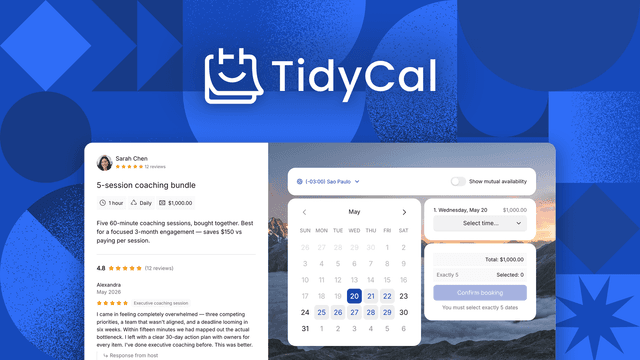
Start with the scheduler. TidyCal's Individual plan is $29 one-time on the GrabLTD page, against a regular price of $144 shown there. Calendly's Standard plan lists at about $10 per seat a month on annual billing, so three years costs about $360 and the lifetime plan breaks even in month 3. Even against a $5-a-month scheduler it breaks even in month 6, so the first year decides it.
Read the limits before you move. The Individual plan includes up to 10 calendars and no team members. It connects to Google, Office 365 and iCal, and it offers unlimited booking types and bookings. Team pages and round-robin scheduling sit on the Agency plan, which is $79 one-time. The GrabLTD plan table leaves calendars, team members and integrations as "not stated" for that tier and carries some older notes that conflict with the FAQ, so check the current table before you pay for team features.
For a solo coach or freelancer, the choice is usually obvious. For a three-person agency, it depends on the team features, and that is where the arithmetic stops being the whole answer.
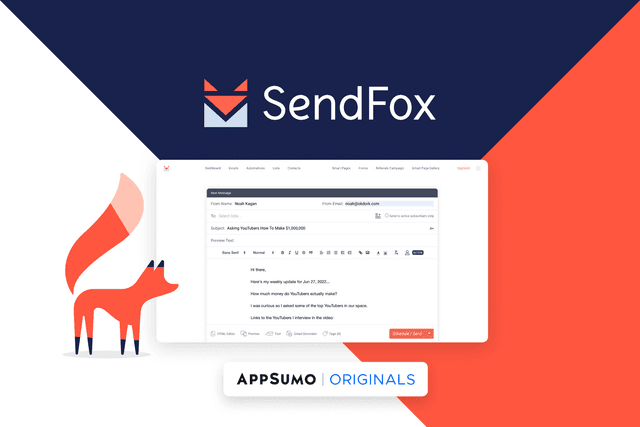
SendFox is listed at $29 one-time, with 5,000 contacts and 300,000 lifetime email sends. Mailchimp's Standard plan starts at about $20 a month for 500 contacts and climbs as your list grows, so three years starts at about $720 and SendFox breaks even in month 2. The SendFox price stays put up to 5,000 contacts.
The catch is in the fine print. Removing branding and getting the extras requires the Empire add-on, which has its own monthly price. Double opt-in is mandatory on the lifetime plan, which adds a step for every new subscriber. SendFox also offers no SMTP access, so a setup that relies on sending through your own mail server will not work.
The honest comparison is therefore a one-time base price plus any add-on you need, against the subscription you would otherwise pay. If you need the branding removed, price the add-on before you call the deal cheap. If you do not, and your list stays under 5,000 contacts, the lifetime figure is close to the whole story.
Automation: Pabbly Connect
Automation is the hardest category to price, because the monthly bill depends on how many tasks you run. Pabbly Connect's Standard plan is $349 one-time, with 3,000 tasks a month and 10 workflows. The Pro plan is $799 for 6,000 tasks and 20 workflows. The Ultimate plan is $1,298 for 10,000 tasks a month with unlimited workflows.
Zapier's Professional plan starts at about $20 a month on annual billing for 750 tasks, and its 2,000-task tier is about $49. Against the entry tier, Pabbly's Standard plan breaks even in month 18. Against the 2,000-task tier it breaks even in month 8. Standard gives you 3,000 tasks and 10 workflows, so the entry-tier comparison is the cautious one.
Pabbly also says its task limits may be out of date on the GrabLTD page, and its one-time plans cannot be upgraded later. Before you choose a tier, count the tasks you run in a normal month, double that figure, and buy the tier that covers the result. A plan you outgrow in a year costs you the whole purchase again.
Cloud storage: Icedrive
Storage is where the arithmetic is least kind to lifetime plans, because monthly cloud storage is cheap per terabyte. Icedrive's Personal plan gives you 500 GB lifetime for $399 one-time on the GrabLTD page, down from a regular $599. Personal+ with 2 TB is $699, down from $1,049.
Dropbox Plus, with 2 TB for one person, lists at about $10 a month. Against that, the 500 GB plan breaks even in month 40 and the 2 TB plan in month 70, so over three years the subscription is cheaper. Lifetime storage starts to win if you keep the files for five or six years, or if you pay more than $10 a month today. Check what you pay and run the same formula before you decide.
Two details matter more than the arithmetic. The lifetime plans add zero-knowledge encryption, which the free plan does not include. The page also does not define "lifetime" in writing, so ask what happens if the service changes hands or closes, and read the terms before you pay. Icedrive's own lifetime page lists a 30-day money-back guarantee, which gives you a short window to test the storage with real files.
Forms and signatures: MakeForms Bundle
Bundles change the arithmetic, because you are comparing one payment with several bills. The MakeForms Bundle is $499 one-time on the GrabLTD page. It combines a form builder, e-signatures and booking pages in one account, with unlimited submissions, 500 GB of storage and up to 100 custom domains.
Typeform Basic alone lists at about $28 a month on annual billing, which is about $1,008 over 36 months, so the $499 bundle breaks even in month 18 on forms alone. Add a separate e-signature or booking tool and it breaks even sooner. If your forms are simple and you need neither signatures nor booking, you are buying parts you do not use. A bundle makes sense when you use all three.
Check two things first. SMS authentication for signatures runs through Twilio, and Twilio's charges may fall on you. The refund and redemption terms were not confirmed on the listing, so ask the seller before you buy. The seller's own deal page did not load when checked, which means the details above come from the GrabLTD listing and should be confirmed on the seller's page.
When a subscription still wins
The lifetime math is not the whole decision. A subscription can be the better buy in three situations.
The first is when your team needs features that lifetime plans leave out or cap, such as team seats or shared admin controls. Check the plan table for those limits before you assume the one-time price covers them.
The second is when the tool changes fast enough that a plan you buy today may not match what you need next year. That is common in AI tools, where feature sets move every few months. A three-year break-even is a poor measure of a product that may look different by then.
The third is when support matters more than price. A monthly plan usually comes with clearer support terms than a one-time deal, and a lifetime plan may not. If a broken workflow would cost you a client, paying monthly for a support line can be the cheaper option.
Here is an opinion you can argue with. A lifetime deal is a bet that the company will still exist, and that the product will still fit your work in three years. The break-even month tells you what the bet costs. It does not tell you the odds. Run the formula with your own numbers, and then decide how much you trust the company behind the tool.
Do the arithmetic first, then read the limits. A deal that wins on price can still lose on a plan table that does not fit your work. Most buyers can answer both in one sitting, with the product pages open next to a notepad, and all deals are a click away.
If the lifetime number breaks even inside 36 months and the limits fit your work, the deal earns its place. If not, keep the subscription and set a reminder for its renewal date.
GrabLTD's links may be affiliate links. That means GrabLTD can earn a commission on some purchases, at no extra cost to you.